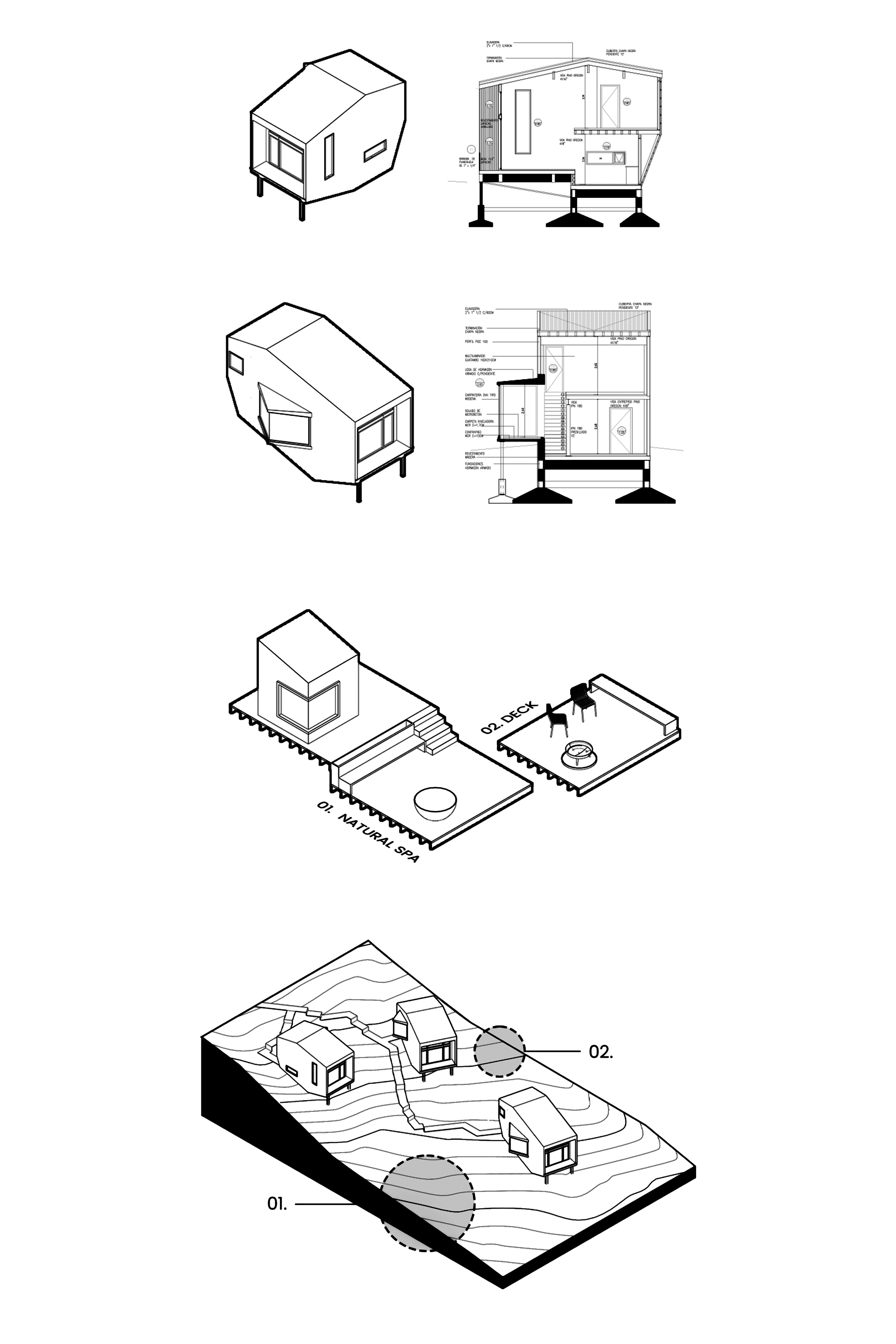
SHORT DESCRIPTION
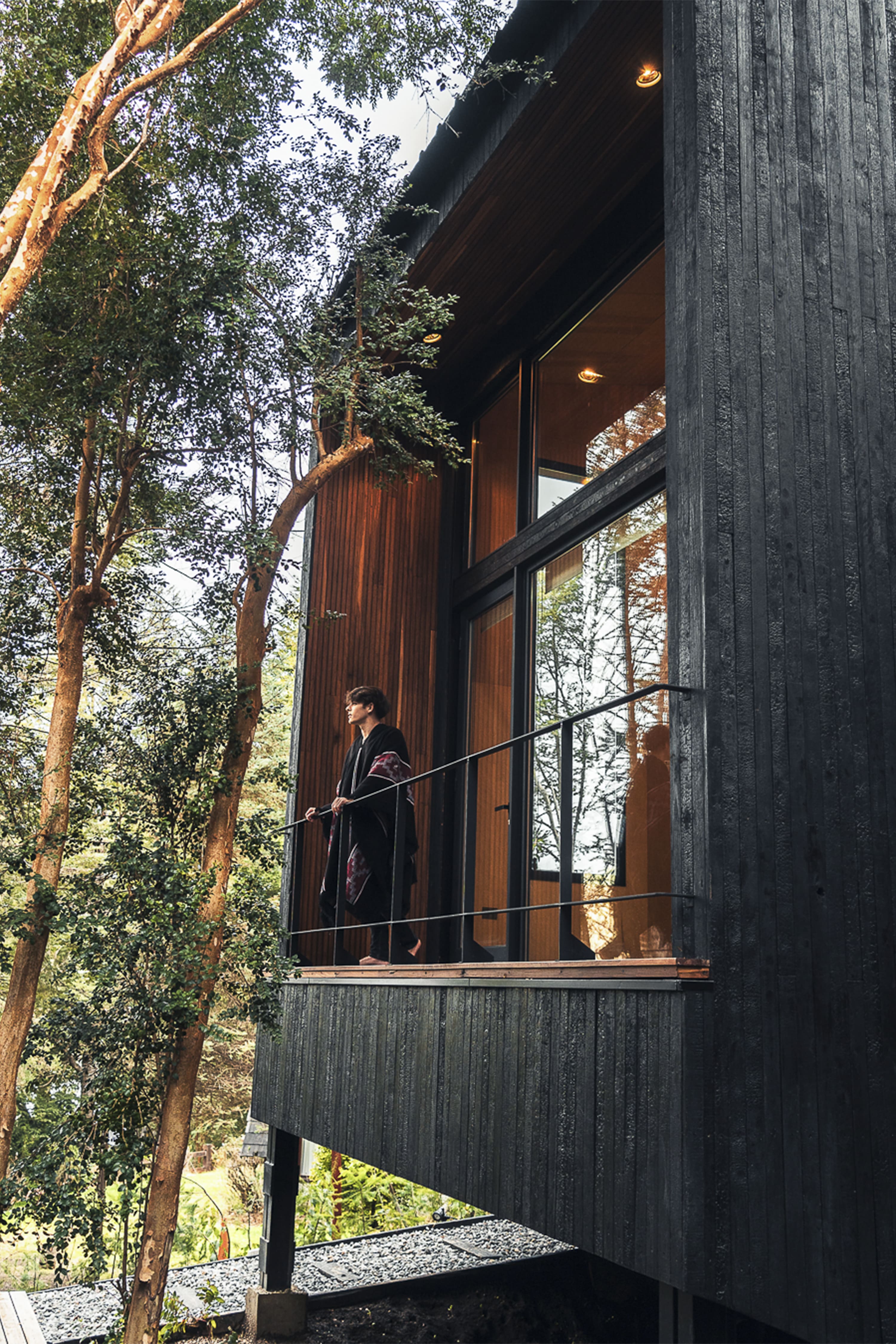
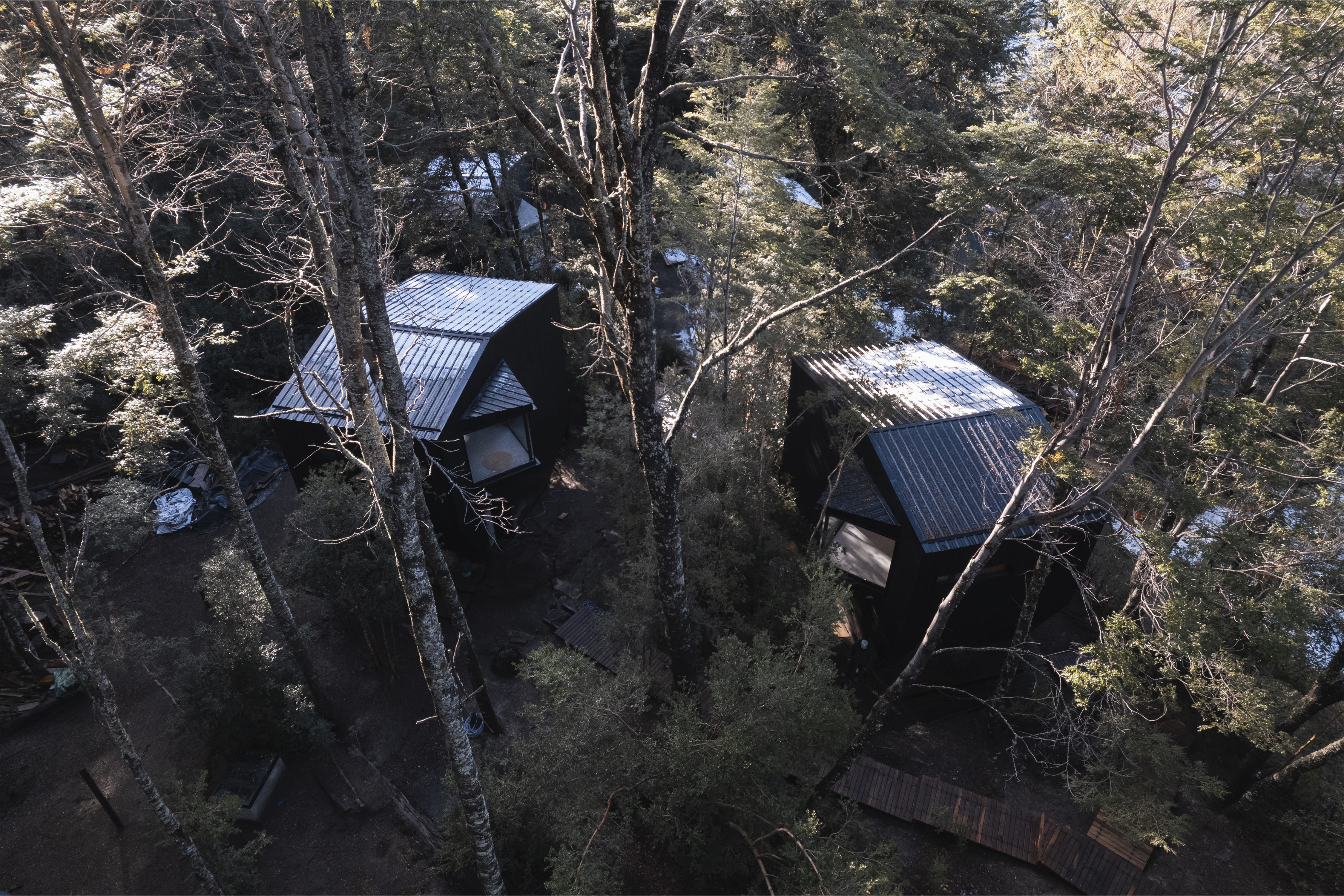
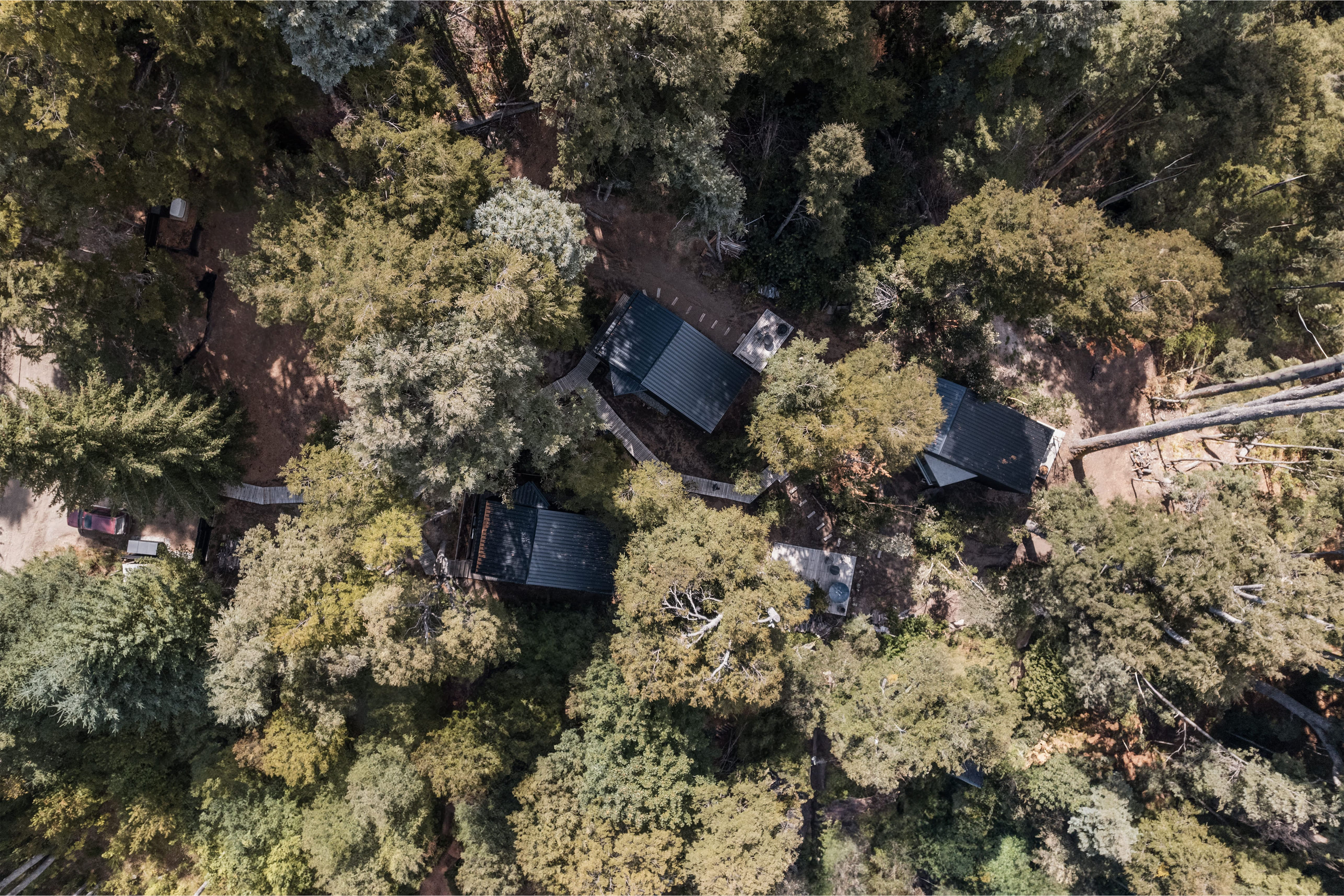
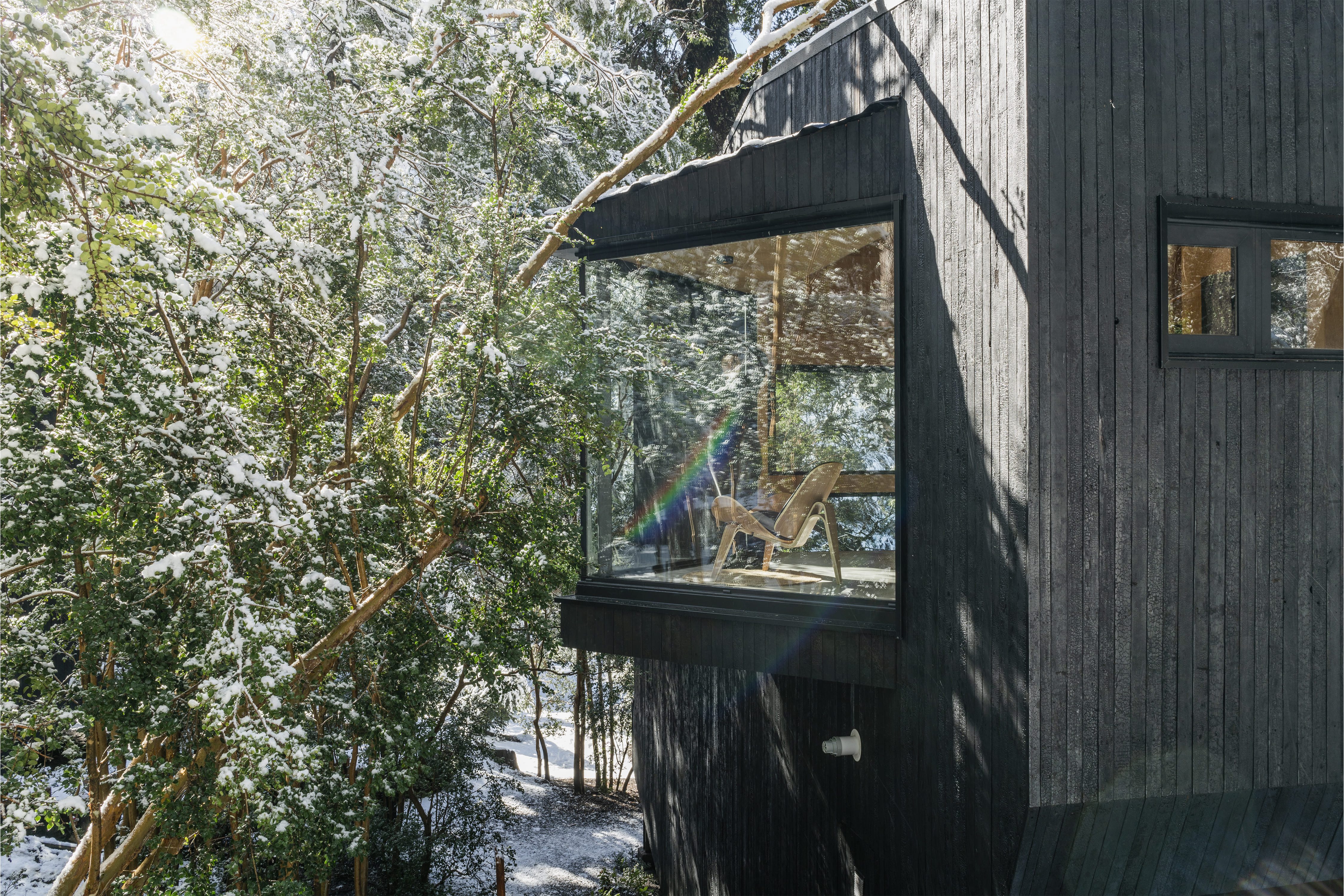
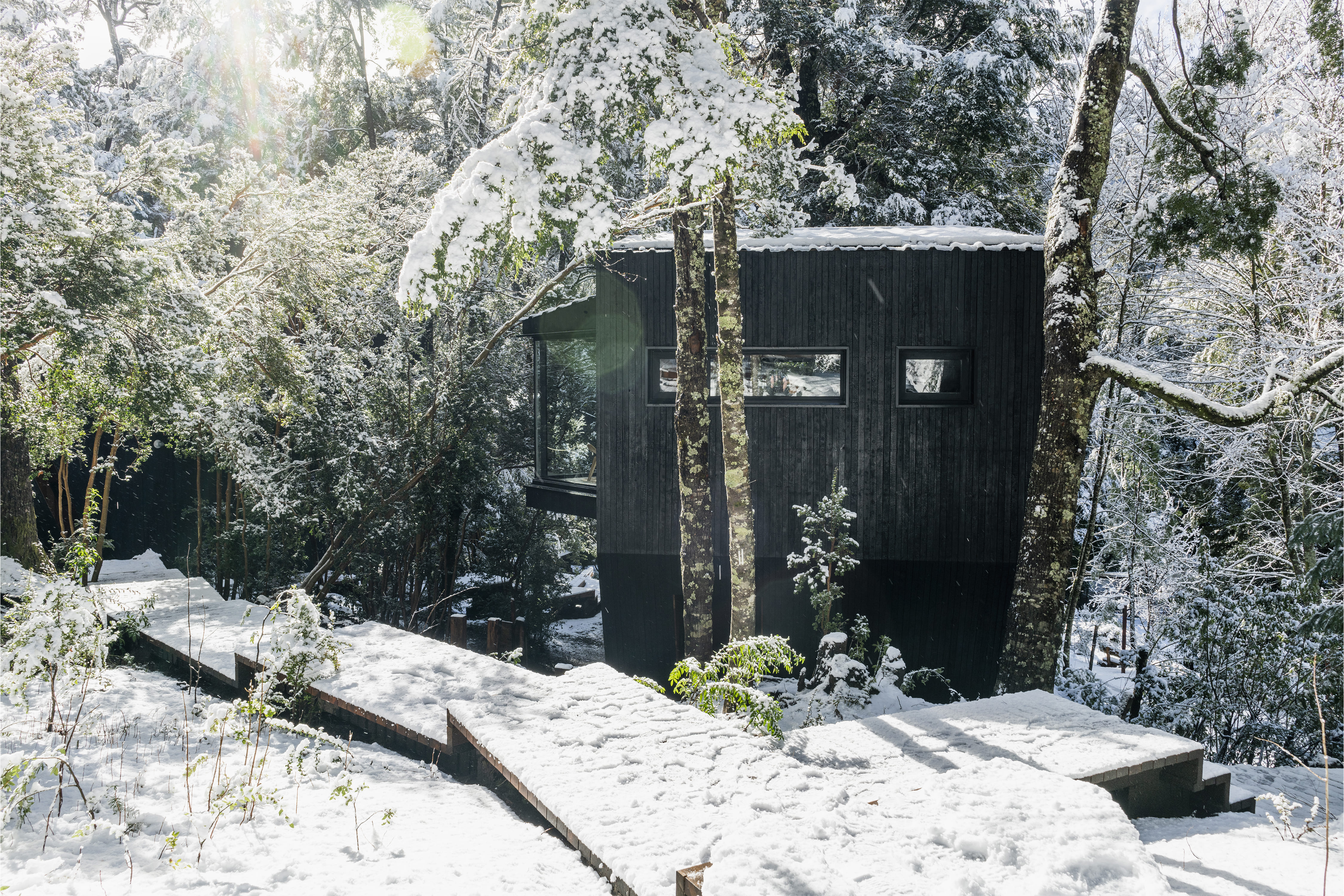
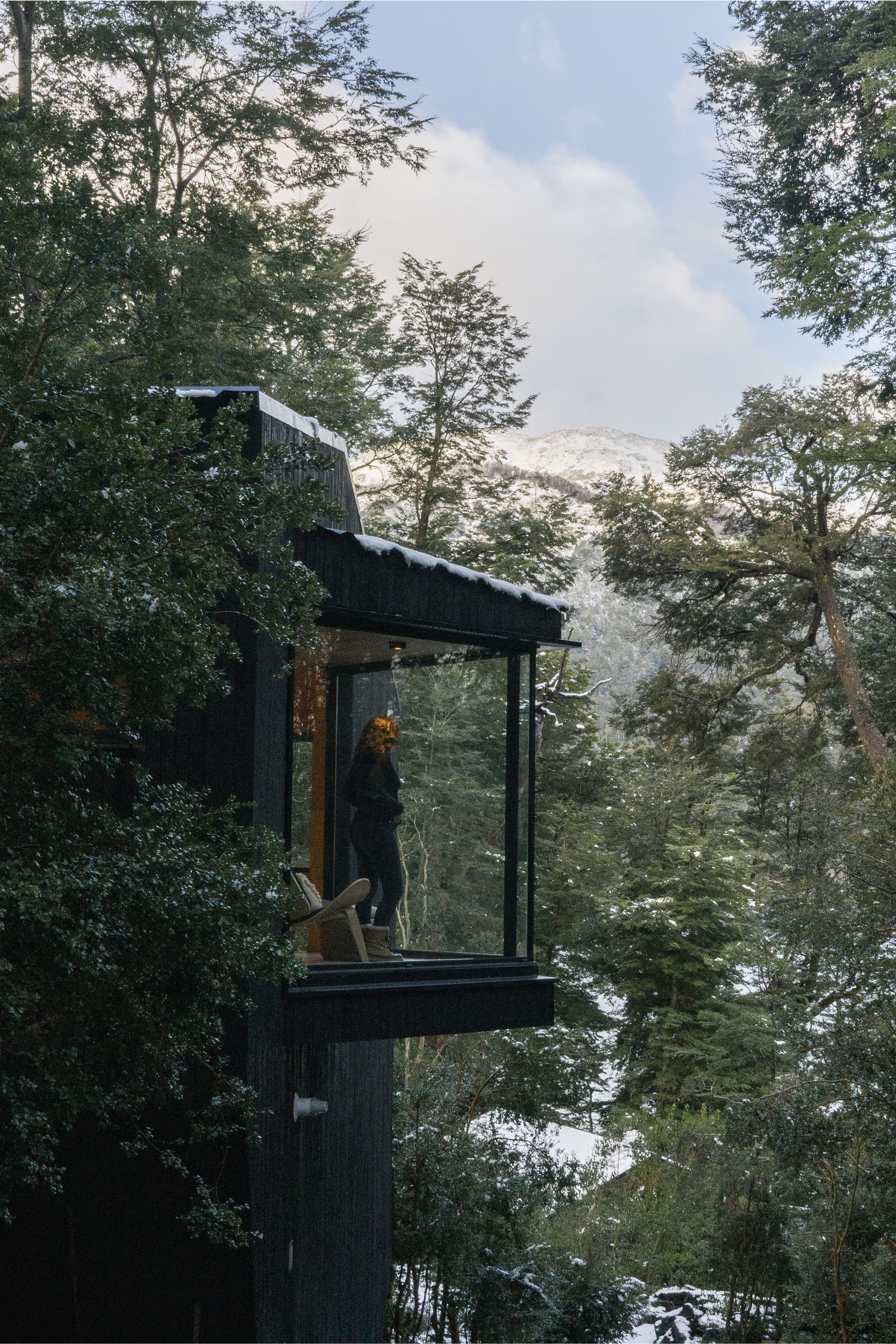
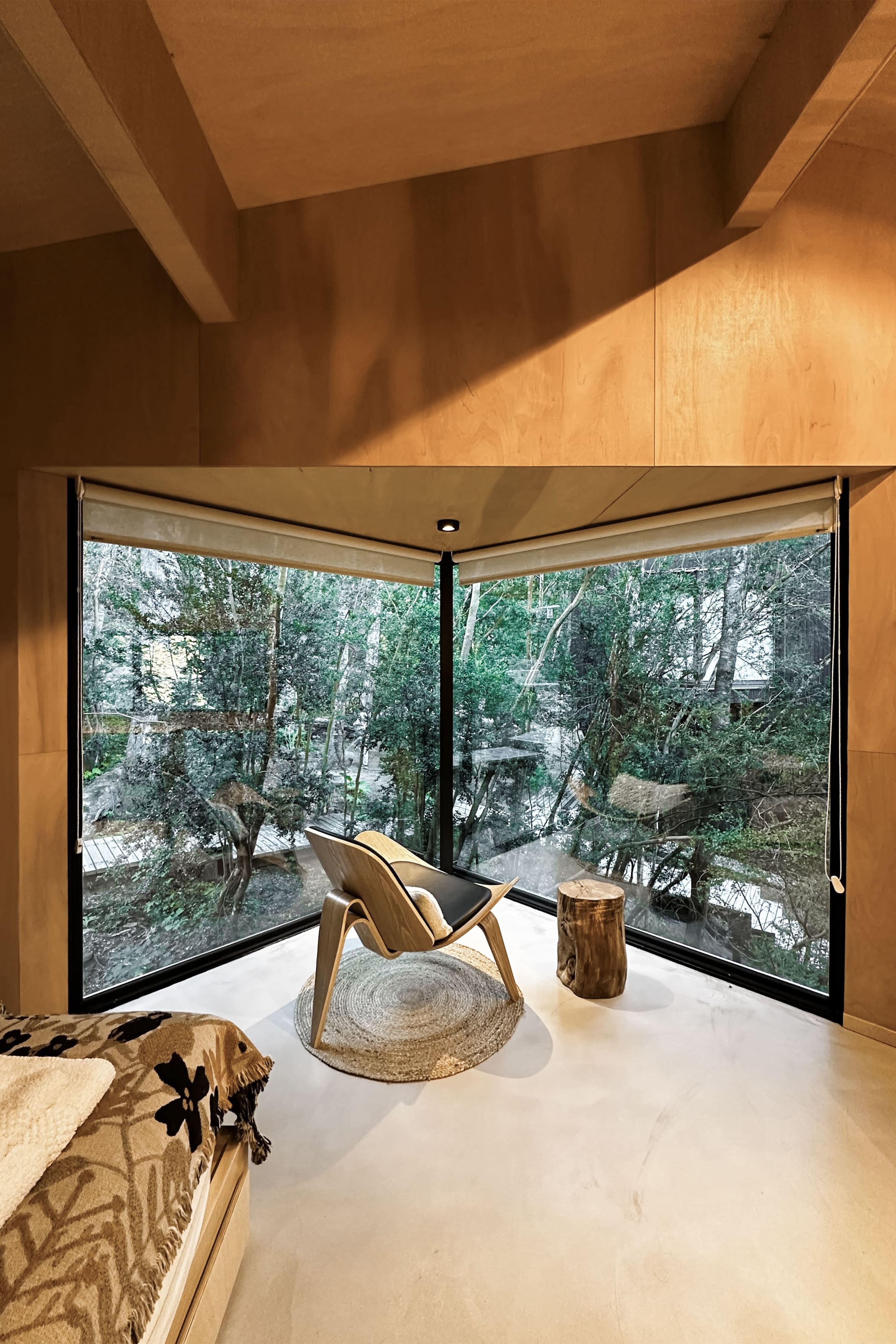
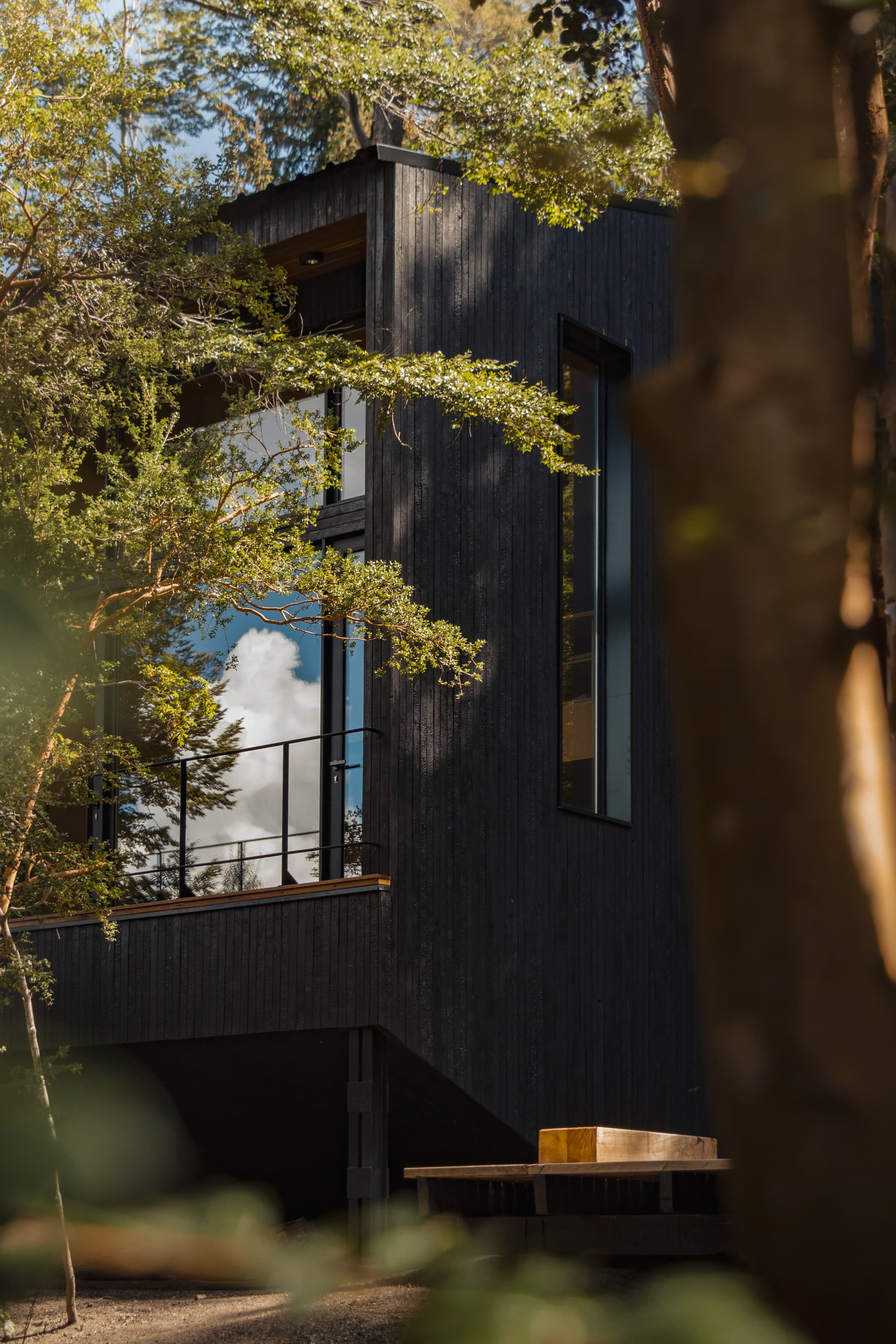
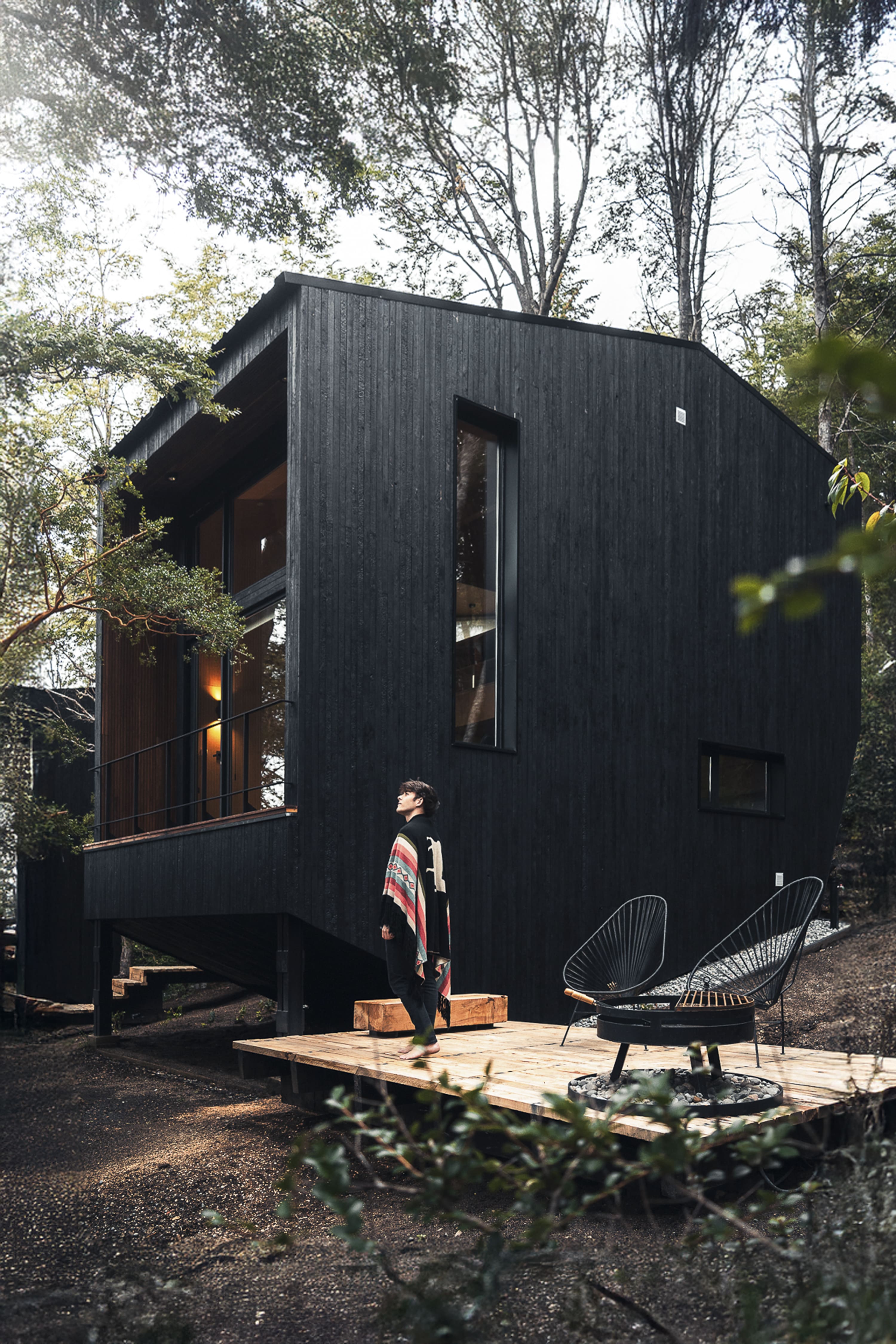
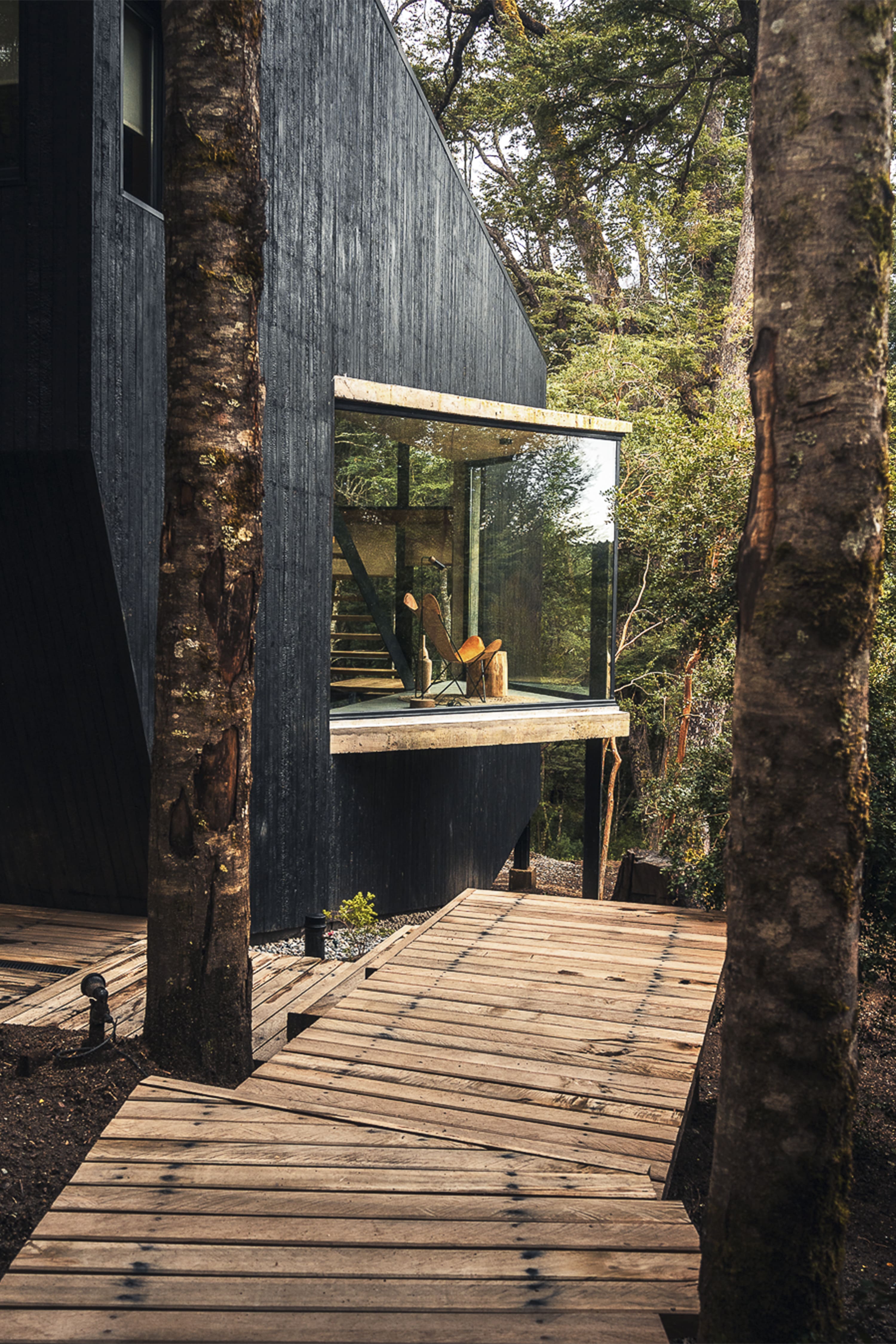
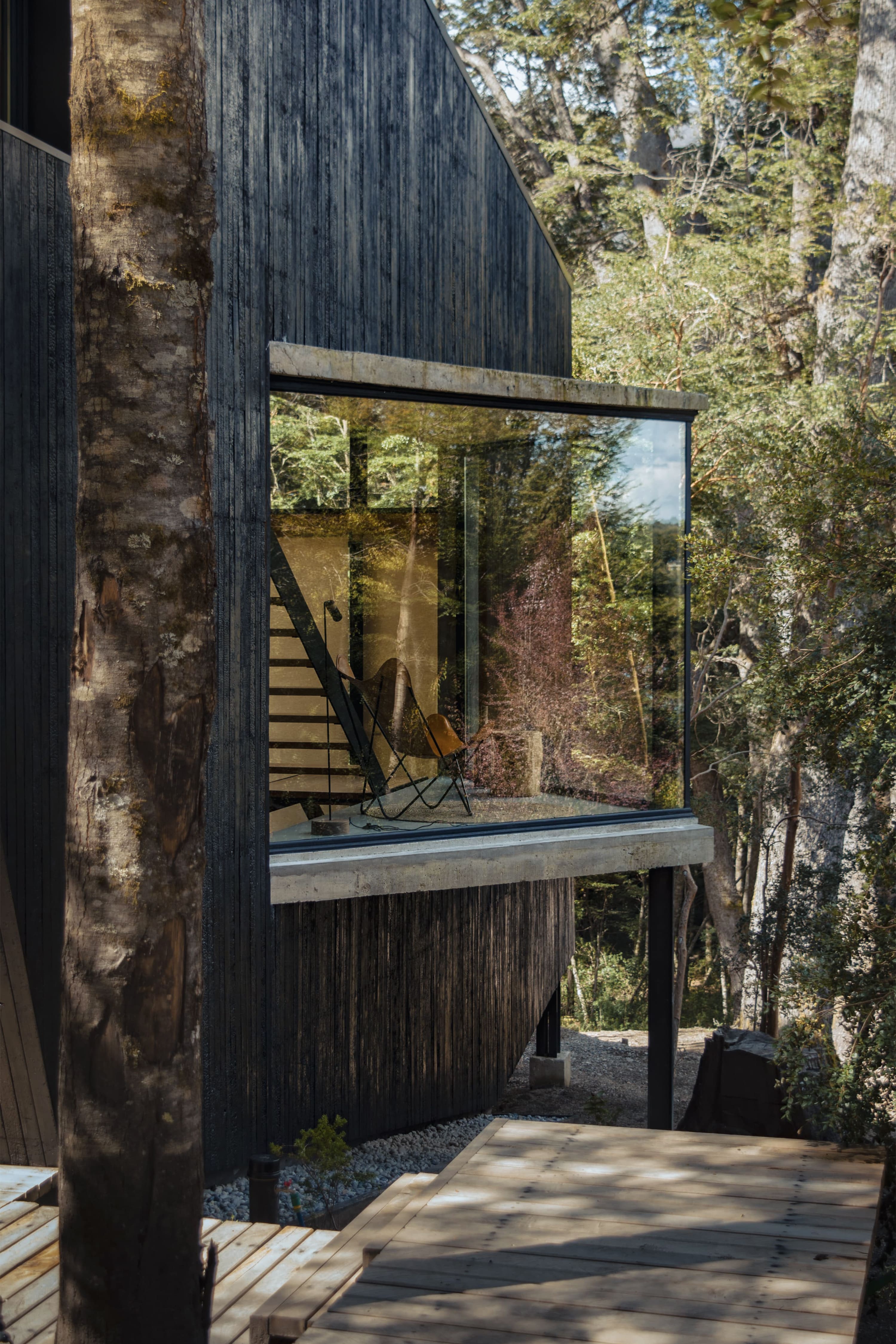
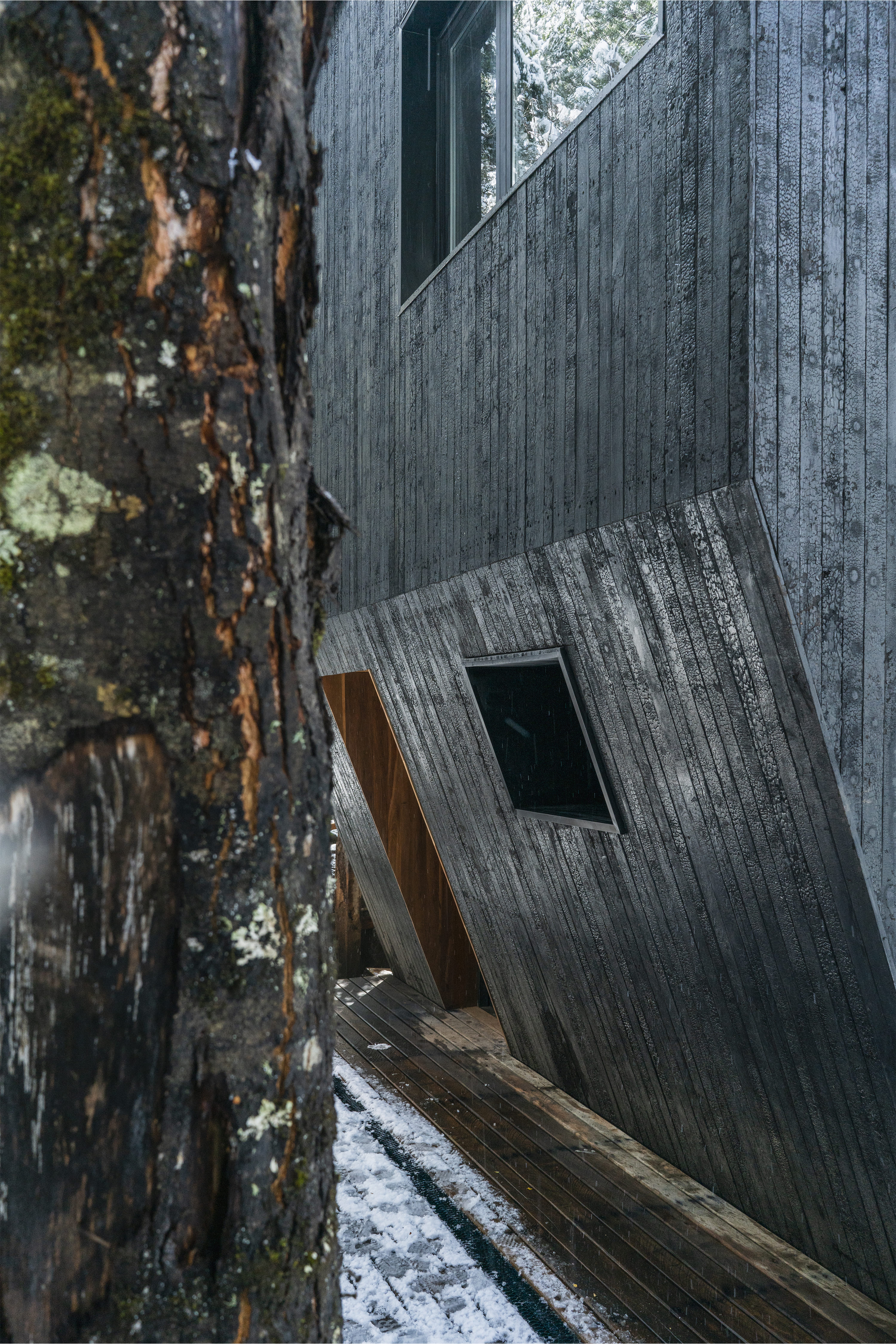
The project involved the creation of a boutique-scale tourist complex (250 m²) within a native forest of Coihues and Arrayanes, on steep terrain with stunning views and direct access to the shores of Lake Correntoso—an incredibly peaceful and natural setting. The proposal consisted of modular “landscape cabins” for two to three guests, conceived as just another element of the forest. Each cabin blends into its surroundings with a sense of controlled randomness—sharing a common architectural language, yet featuring subtle variations that give each one a unique identity. The cabins were carefully placed in natural clearings where no trees needed to be cut down, staying true to their core objective: to create an architecture that coexists harmoniously with the forest. Despite their compact footprint, the cabins offer a captivating spatial experience—dissolving the boundaries between the interior and the surrounding forest. Each unit is designed as a single open space, split across half-levels and punctuated by large, strategically positioned windows. These openings extend the sense of space outward and allow the dense Myrtle canopy to provide both privacy and immersion in nature. This approach also fosters intimacy between each volume and the communal areas of the complex. The bathrooms are spacious and comfortable. The largest cabin features a freestanding tub with panoramic views—inviting guests to enjoy a hot bath while watching the snowfall through the window. The architects anticipated the project's logistical challenges: a narrow, sloped site densely populated with trees. To address this, they opted for dry construction atop reinforced concrete foundations, requiring precise and efficient planning. Externally, the cabins feature a rugged, rocky morphology clad in eucalyptus wood, treated with the ancient Japanese technique Shou Sugi Ban. This method—charring the wood’s surface—creates a unique texture and improves water resistance, fire retardancy, sustainability, and durability.